

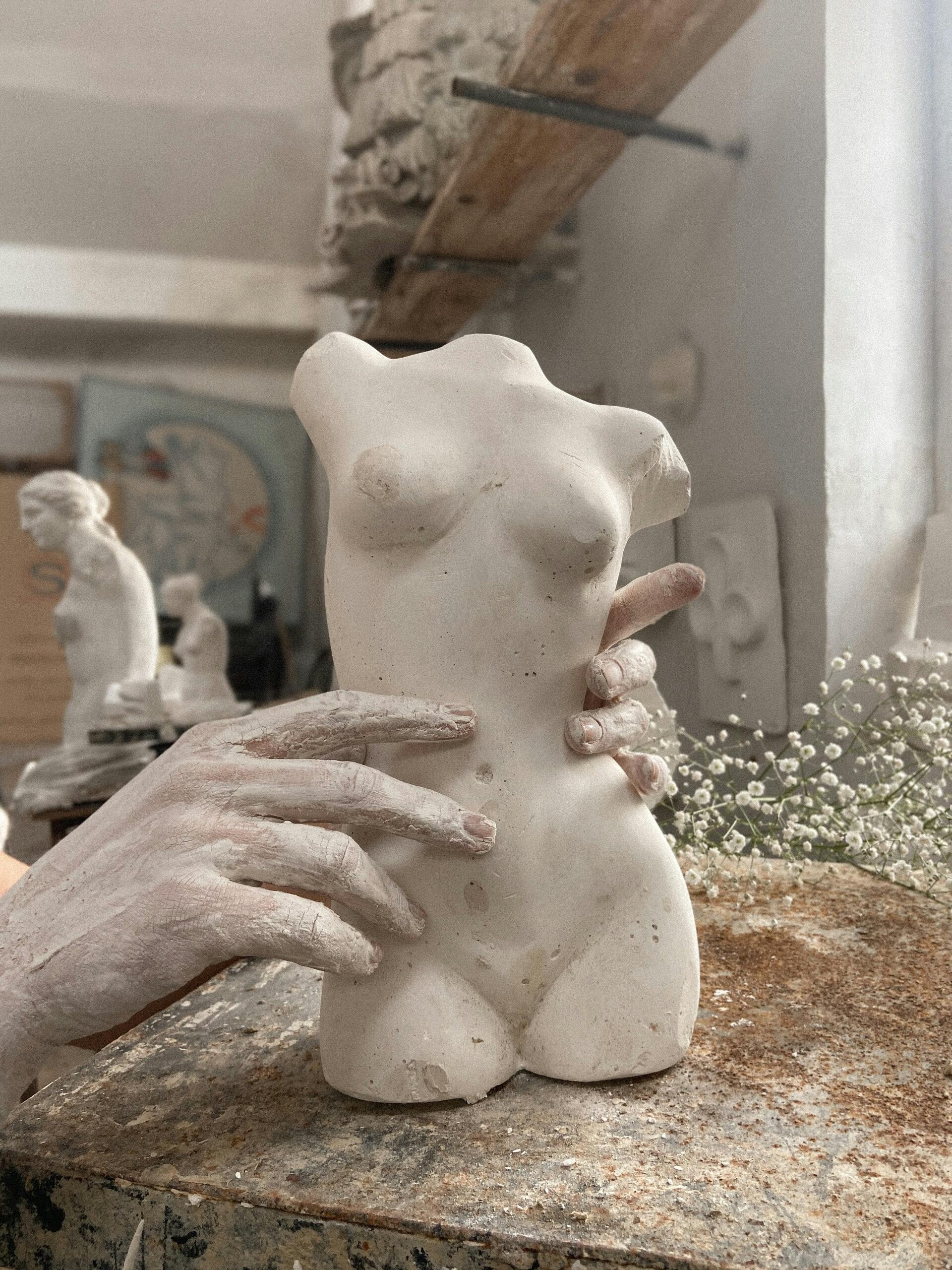
Every Face Is Different. Every Vulva Is Different.
FIGA: The Vulva Collection transforms the vulva from a simple anatomical feature into a universal symbol of desire, power, origin, identity, and freedom. Through artworks and artist-made objects, the project explores the boundary between the sacred and the profane, beauty and provocation, celebrating the female body as a space of creation, energy, and imagination.
The vulva carries millennia of meanings: fertility, birth, motherhood, sexuality, female deities, taboos, censorship, emancipation, and artistic representation. Each work invites viewers to rediscover this symbolic heritage, challenging stereotypes and prejudices while restoring the vulva to its place as a cultural, artistic, and iconic presence.
Every vulva is unique, just as every woman is unique. The collection celebrates the diversity of female bodies and stands against aesthetic stereotypes and body shaming, reminding us that there is no universal standard of beauty. This diversity is reflected not only in the forms represented, but also in the materials used: raw plaster on canvas, imperfect acrylic brushstrokes, natural clay, and other textured surfaces that preserve marks, irregularities, and imperfections. These elements become an integral part of each artwork, serving as a metaphor for authentic beauty beyond artificial and idealized standards.
Materials and Process
Every artwork in The Vulva Collection begins with a dialogue between idea and material.
The materials are never neutral: they shape the image, influence the gesture, and contribute to the meaning of each piece. Some allow for softness and fluidity, others introduce texture, fragility, weight, or resistance.
Together, they help transform concepts such as identity, desire, imperfection, memory, and the female experience into tangible forms.
The collection combines painting, relief, and small-scale sculpture, embracing both refined and raw surfaces.
Imperfections, cracks, marks, and textures are not concealed but welcomed as part of the creative process, reflecting the uniqueness and complexity of the subjects represented.
Oil and Acrylic Paint
Painting is the foundation of many works in the collection. Oil paints allow colors to blend gradually, creating soft transitions and luminous surfaces that give the images a sense of lightness, as if they were floating between reality and imagination.
Acrylic paint offers a different quality. More immediate and direct, it produces denser marks and stronger contrasts. Its presence often feels closer to a stain, a trace, or a gesture, bringing energy and materiality to the surface.
Air-Dry Clay
Air-dry clay is used to create small sculptural elements and artist-made objects. Its softness makes it particularly intuitive and enjoyable to work with, allowing forms to emerge through touch and gradual shaping.
What begins as a flexible and malleable material slowly hardens, preserving the gesture that created it. This transformation—from softness to permanence—makes the material especially meaningful for works that explore themes of identity, memory, and physical presence.
Plaster, Stucco and Textured Surfaces
Plaster and stucco are the primary materials used for the textured paintings. Unlike smooth painted surfaces, these works embrace roughness, scratches, cracks, and imperfections.
The resulting forms often feel raw, primitive, and almost archaeological, as if they had emerged from a wall, a ruin, or an ancient artifact. Their coarse textures contrast with contemporary ideas of perfection, celebrating instead the beauty of what is worn, imperfect, and deeply human.
Scagliola
Scagliola is used exclusively for the breast sculptures within the collection. Delicate and sensitive, it requires a careful approach throughout the making process.
Its fragility is part of its appeal. Rather than seeking perfection, the material preserves subtle irregularities and surface variations, reinforcing the individuality of each piece and the uniqueness of the body it represents.
Create Your Own Website With Webador