

Long before written history, the female body was already being represented as a symbol of creation, fertility, and abundance. During the Paleolithic period, prehistoric figurines known as the Venuses emphasized features associated with pregnancy, nourishment, and the ability to generate life.
Among the earliest known examples is the Venus of Willendorf (c. 28,000–25,000 BCE), a small limestone figurine whose exaggerated forms highlight the reproductive aspects of the female body. In some prehistoric representations, the vulva itself was depicted explicitly, not as an object of sexuality, but as a powerful symbol of birth, fertility, and the continuity of life.
These early representations reveal how the female body was associated with creation, abundance, and the mystery of life long before the emergence of written history.
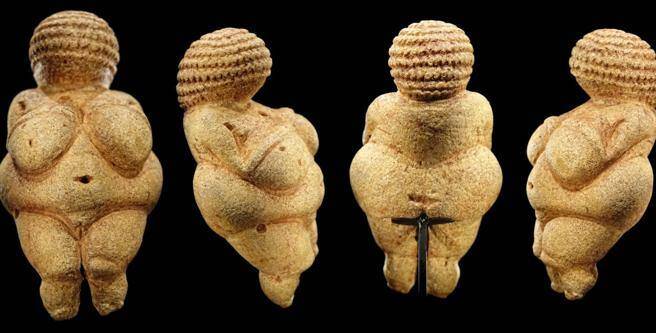
Venus of Willendorf (c. 28,000–25,000 BCE).
Photo by Bjørn Christian Tørrissen, licensed under CC BY-SA 4.0 via Wikimedia Commons.
Add comment
Comments