

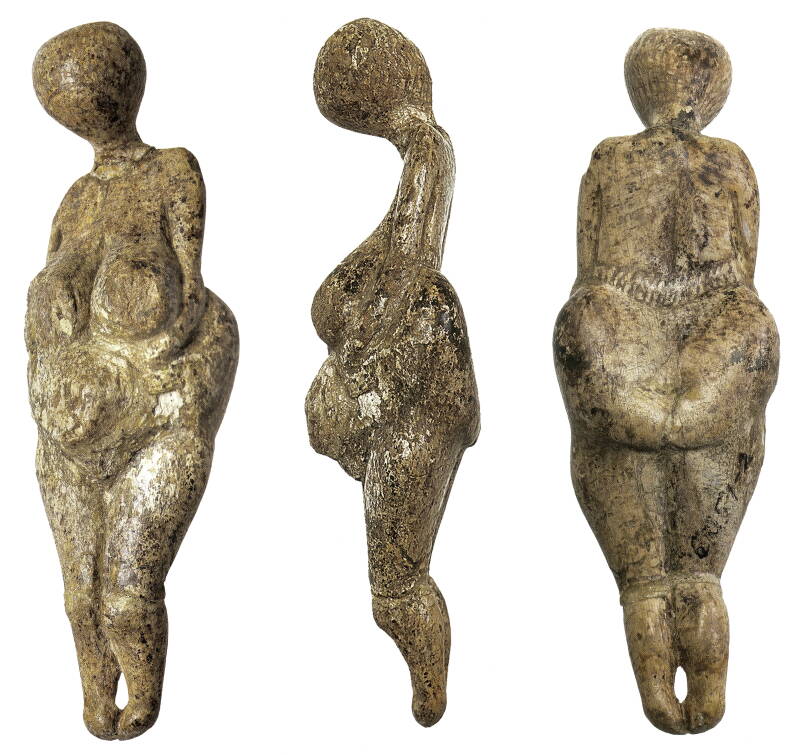
Venus of Kostenki 1 (c. 24,500–21,500 BP). Paleolithic female figurine discovered near Kostenki, Russia. - Photo: Merkel und Weiss (2017), via Don's Maps.
For generations, prehistoric Venus figurines have been interpreted as symbols of fertility, pregnancy, and motherhood. Yet archaeologists continue to debate their meaning, suggesting they may have represented much more than reproduction alone. Some researchers have proposed that these figures celebrated womanhood in all stages of life, while others see them as symbols of identity, ancestry, status, protection, or survival.
What makes these objects so fascinating is that no single interpretation can fully explain them. Created across different regions, cultures, and centuries, the figurines vary considerably in form, proportion, and style. Their diversity suggests that the female body already carried multiple meanings long before written history.
Today, contemporary artists continue to revisit these ancient symbols, transforming them into new reflections on identity, freedom, sexuality, memory, and the female experience. While the meanings have evolved, the dialogue between art and the female body remains remarkably alive.
Add comment
Comments