

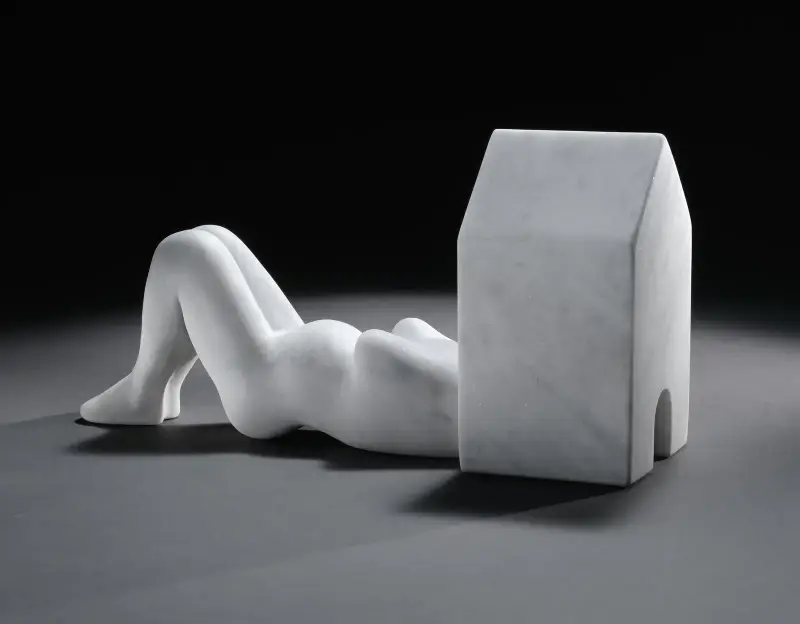
Femme Maison, 1947. Louise Bourgeois
Louise Bourgeois explored femininity through memory, emotion, and personal experience. Rather than representing the female body in a literal way, she used symbolic forms to address themes such as motherhood, sexuality, identity, fear, and desire. Her work often blurs the boundaries between body, architecture, and landscape, creating images that feel both intimate and universal.
One of her most influential series is Femme Maison (Woman House), in which female figures appear merged with houses. These works reflect the tension between personal identity and social expectations, becoming enduring symbols of the female experience in modern art.
Throughout her career, Bourgeois challenged idealized representations of women. Her sculptures embrace vulnerability, strength, ambiguity, and transformation, presenting femininity as something complex rather than fixed. In her work, the body becomes a metaphor for memory, emotion, and the many dimensions of human experience.
Add comment
Comments