

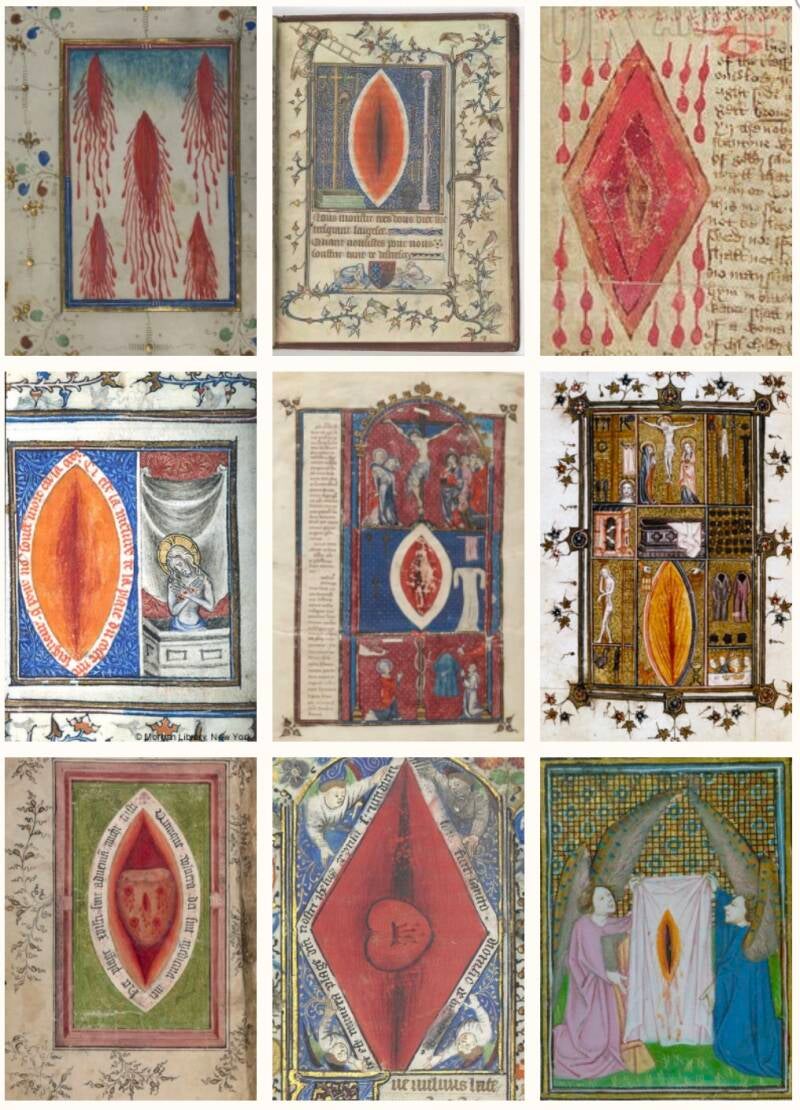
Christ's Side Wound in medieval illuminated manuscripts, 14th–15th centuries.
Composite image from various sources.
Across cultures and throughout history, the female body has often been associated with creation, transformation, and the mysteries of life. Long before modern discussions about anatomy or sexuality, symbols related to the vulva appeared in religious contexts as representations of fertility, protection, abundance, and divine power.
In many ancient traditions, the feminine was not viewed as separate from the sacred. Goddesses, fertility figures, and symbolic images of birth reflected the belief that the power to create life connected women to forces beyond the human world. The vulva could therefore function as a religious symbol, expressing renewal, prosperity, and the cyclical nature of existence.
While meanings varied across cultures and periods, these symbols reveal a recurring theme: the female body was often understood not only as a biological reality but also as a source of spiritual significance.
The enduring presence of these symbols reveals how deeply the ideas of creation, fertility, protection, and feminine power have been woven into human cultures across time.
Add comment
Comments